




As automation and digital systems accelerate, manufacturers are struggling to keep critical skills on the floor. This guide breaks down the operational hidden costs of skills gaps – from ramp delays and rework to audit risk and churn – and outlines what modern, repeatable readiness looks like across roles, shifts, and sites.
Table of Contents
Table of Contents

When critical skills aren’t available where and when they’re needed, the impact shows up everywhere: bottlenecks, rework, missed throughput targets, safety exposure, and higher turnover. And because the costs are spread across operations, quality, and compliance, they’re often underestimated until performance slips.
The Skills Gap is Widening – And It’s Not a Talent Problem
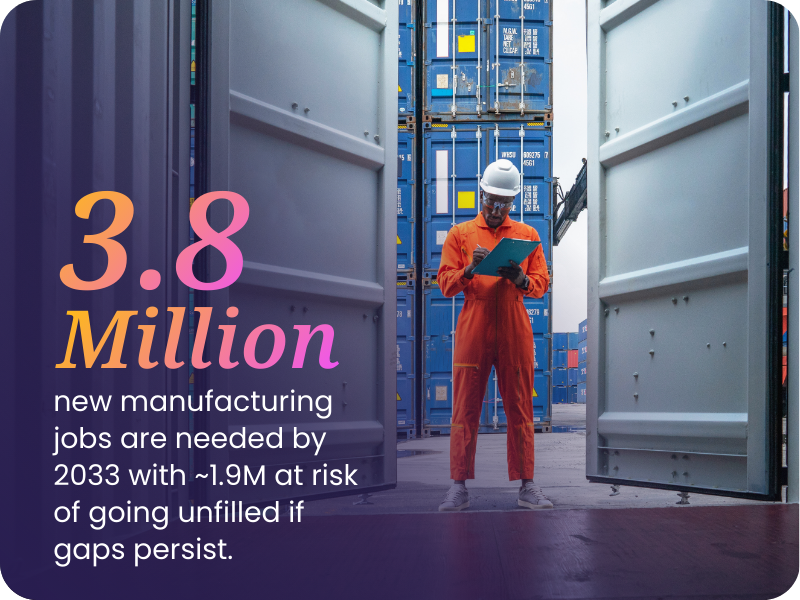
U.S. manufacturing may need up to 3.8M new workers by 2033, with nearly half of those roles at risk of going unfilled. Meanwhile, traditional “one-and-done” manufacturing onboarding and upskilling programs – which often rely on in-person instruction – can’t keep pace with industry hiring and skill demands that continue to evolve to keep pace with rapid changes in equipment, processes, and digital workflows.
Skills Gaps Drag Performance
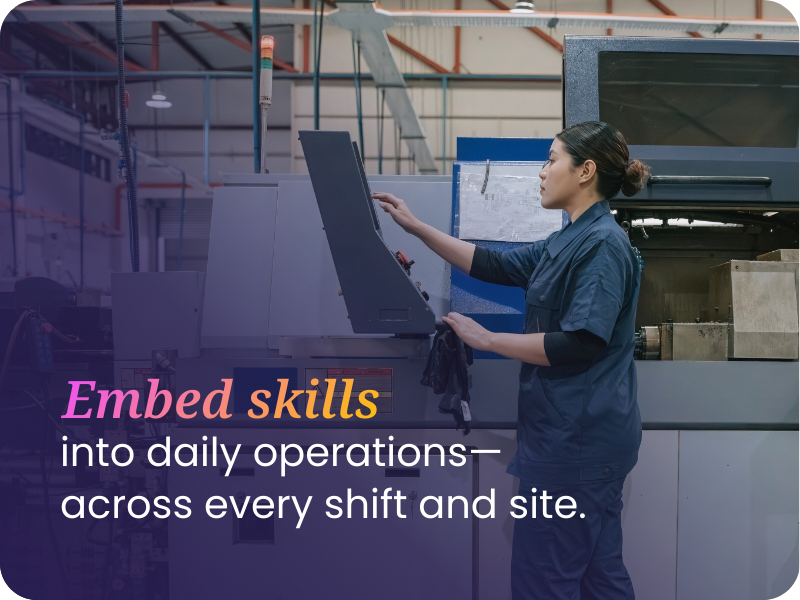
Undertrained teams lead to productivity loss that traditional metrics can mask. If training for critical skills isn’t available where and when teams need it, the impact shows up everywhere: bottlenecks, rework, missed throughput targets, safety exposure, and higher turnover. And because the costs are spread across operations, quality, and compliance, they’re often underestimated until performance slips.
Continuous Learning Prevents Instability
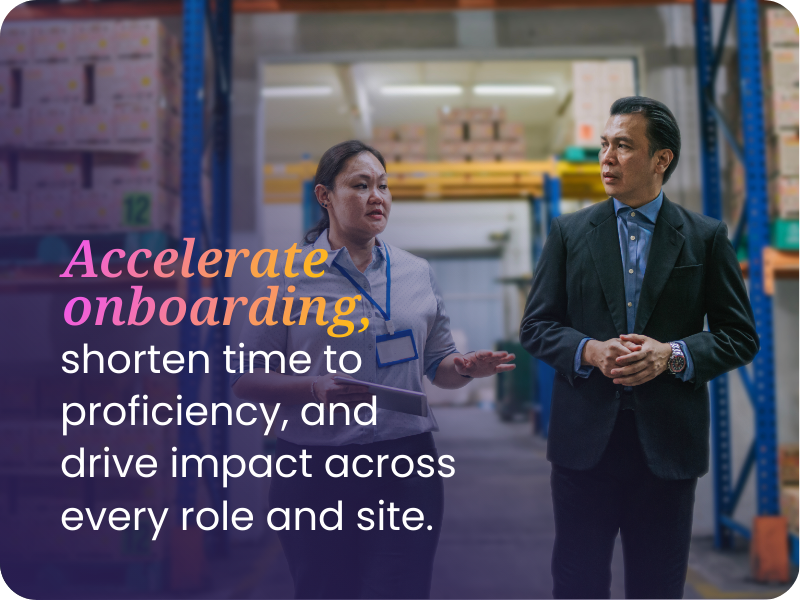
Repeated onboarding cycles drive training costs and reduce facility efficiency. That’s because when your people feel unprepared or don’t see a growth path, they’re less likely to stick around. This often results in repeated backfills, which force companies to restart costly and time-consuming training. Repeatable, scalable onboarding and continuous learning drives workforce readiness, empowering new hires and transfers hit productivity targets faster.
Stop Bottlenecks at the Source
Learn how to identify and proactively address skills gaps in your manufacturing organization. Uncover the Hidden Costs of Manufacturing Skills Gaps gives you a step-by-step guide on how to spot workforce skill needs, and an action plan for closing those gaps without slowing throughput or increasing headcount.